

The Brief
Threat intelligence disclosures highlight an operational shift amongst advanced adversaries: attackers are moving past basic prompt generation to deploy automated, multi-step agentic workflows that execute cloud intrusion tasks in hours. Defending modern architecture now demands rigorous zero trust controls, automated detection, and specialised AI security engineering.
The Pivot to Agentic Cyber Operations
Recent threat intelligence reports demonstrate that cyber adversaries are advancing their operational tradecraft beyond conversational prompt assistance. An industry threat analysis reported by Security Boulevard highlights that Google Threat Intelligence and Anthropic have tracked threat actors shifting towards fully agentic workflows. In one monitored campaign, adversaries compromised an initial cloud asset and subsequently deployed autonomous agent tooling to coordinate, build, and execute mass credential-harvesting activities within six hours.
This marks a quantitative evolution from earlier generative AI tactics, such as the experimental polymorphic scripting observed in malware research. Instead of merely rewriting static commands or tailoring phishing texts, attackers now leverage software agents that self-direct tool use, triage reconnaissance data, and navigate lateral environments. The compression of intrusion cycles forces defenders to rethink conventional detection windows that formerly relied on multi-day dwell times.
Anthropic's telemetry further corroborated this trajectory. An evaluation of banned accounts linked to malicious activity revealed that 560 instances engaged AI for malware development, while dozens harnessed model workflows specifically to coordinate lateral movement across internal enterprise infrastructure.
Why Traditional Boundary Controls Fail Against Autonomous Agents
Automated attacker workflows expose the structural limitations of perimeter-centric security models. When an autonomous agent gains initial access through valid credentials, legacy boundary checks rarely flag subsequent anomalous API calls if permissions are broad. Perimeter firewalls and static access management tools cannot distinguish between an authorised human engineer and an agent executing high-speed reconnaissance under acquired tokens.
To counter dynamic agentic intrusions, zero trust design patterns detailed by standards such as NIST SP 800-207 require strict, continuous verification. Access policies must move from coarse-grained network zones to adaptive identity checkpoints that continuously evaluate contextual signals. In agentic attack scenarios, establishing real-time behavioural baselines becomes mandatory to restrict automated lateral movement.
Furthermore, emerging runtime inspection frameworks, such as dedicated proxies catalogued by Tracxn, increasingly seek to intercept agent tool calls and enforce policy validation before API executions execute sensitive system actions.
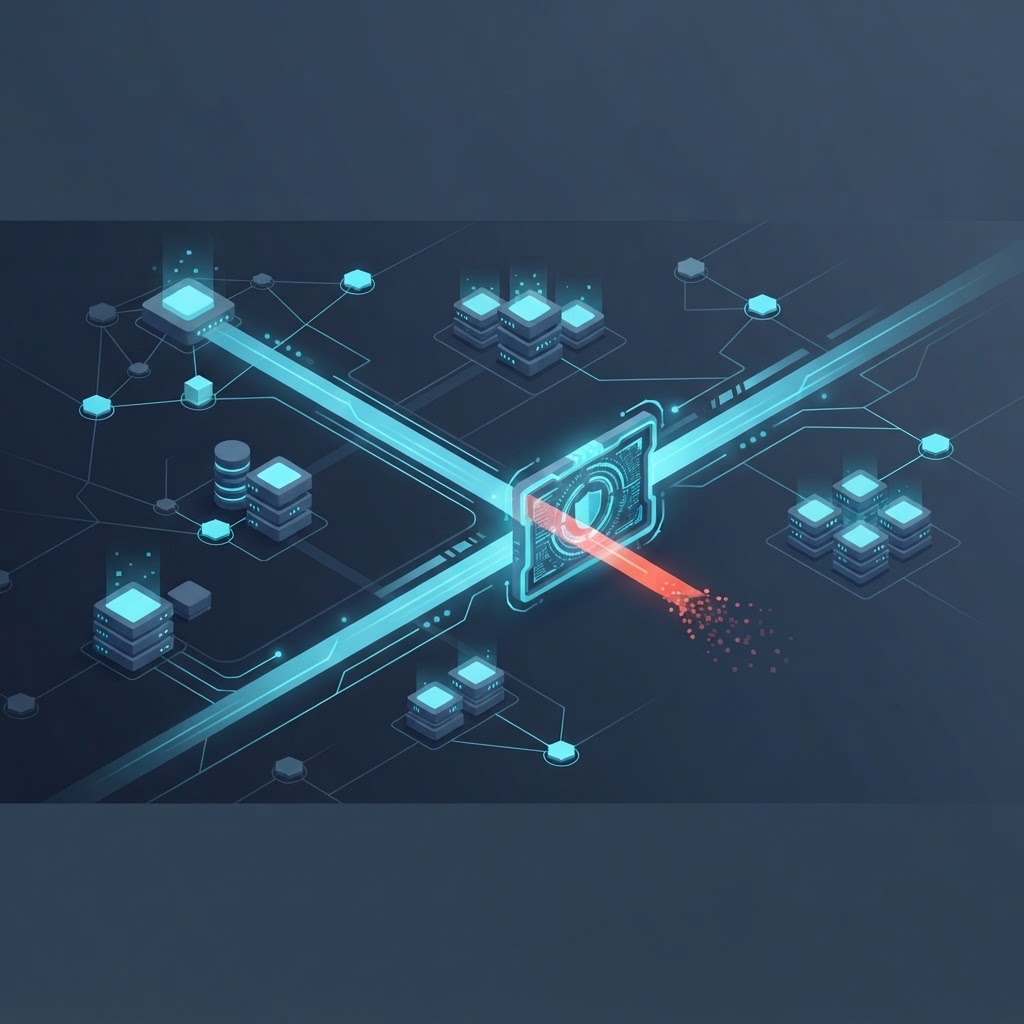
- 01Initial CompromiseAn adversary obtains entry via misconfigured cloud credentials or unpatched interfaces.
- 02Autonomous PlanningThe attacker agent maps local network topologies and queries internal identity stores.
- 03Context EvaluationReal-time policy engines analyse anomalous request velocity and flag non-human telemetry.
- 04Least Privilege InterceptionZero trust enforcement revokes scoped tokens, preventing automated lateral traversal.
Illustrative design pattern, not a vendor architecture.
Institutional and Strategic Responses to High-Speed Threats
Policy leaders and enterprise security heads recognise that technological mitigations must match this accelerated attack surface. Commentary reported by Cybersecurity Dive underscores that public-sector cybersecurity leadership continues to urge organisations to reinforce operational fundamentals alongside AI-specific defences. Without structured visibility into basic digital assets, even cutting-edge autonomous defences fail.
Modern defensive strategy requires organisations to modernise operational baselines. The proliferation of unsanctioned internal AI tools, combined with external agent-driven threats, means security teams must audit API tokens, enforce strict session lifetimes, and eliminate obsolete network connections. Autonomous attack tools excel at identifying unmonitored infrastructure that enterprise audits overlook.
The challenge for security operations centres is operational velocity. Human analysts cannot review alerts manually when multi-step agent intrusions compress hours of exploration into minutes. SOC platforms must adopt machine-speed correlation to isolate compromised credentials before lateral expansion occurs.
| Capability Focus | Traditional Security Posture | Agent-Aware Zero Trust Posture |
|---|---|---|
| Access Scope | Static role-based network boundaries | Dynamic contextual micro-segmentation |
| Dwell Time Window | Days to weeks across manual investigations | Sub-hour automated response triggers |
| Identity Verification | Point-of-login multi-factor checks | Continuous API and agent session telemetry |
| Tool Invocation | Uninspected internal automation | Semantic policy proxies and payload scanning |
Practical Career Implications for Security and Cloud Practitioners
For technology professionals, career changers, and students, the emergence of agent-driven intrusions significantly recalibrates job requirements. Demand is shifting away from static firewall configuration toward identity governance, automated detection engineering, and runtime API security. Professionals who understand how AI frameworks access corporate infrastructure will lead enterprise security initiatives.
Cloud security engineers must prioritise policy-as-code and automated privilege containment. Understanding how to configure short-lived credentials and implement granular IAM policies across hybrid environments is now an essential defence against automated token harvesting. In our analysis, practitioners who master infrastructure micro-segmentation will become indispensable across enterprise cloud transformation teams.
Similarly, detection analysts require expertise in behavioral telemetry and machine learning fundamentals. Security teams need professionals capable of constructing threat models for multi-step agent interactions and distinguishing automated bot reconnaissance from normal administrative automation. This requires cross-disciplinary literacy across prompt structures, API gateway architecture, and system logs.
Practical Next Steps for Technology Teams
Organisations must audit service account tokens and agent execution privileges immediately. Restrict internal automation accounts to least-privilege roles, implement short token expiry limits, and ensure all cloud administrative actions require interactive, multi-factor approvals. Establishing automated alerting on high-velocity API access offers an immediate baseline defence against malicious agent orchestration.