

The Brief: Salesforce has initiated the October 2026 general availability roll-out of Agent Optimizer and modular AI Skills across Agentforce, shifting enterprise CRM responsibilities from routine declarative administration to supervisory agent engineering and continuous observability.
The Shift to Autonomous Agent Lifecycle Management
Enterprise CRM ecosystems are entering a new phase of automation where artificial intelligence systems configure and supervise other artificial intelligence systems. As detailed in the official roadmap unveiled at Dreamforce 2026 Announcements, Salesforce scheduled the general availability of both Agent Optimizer and reusable AI Skills for October 2026. This deployment fundamentally transforms how operational teams maintain enterprise workflows across complex business units.
Agent Optimizer operates directly within Agentforce Builder to generate subagents, test declarative workflows, and stub out complex actions from plain-language intent prompts. More significantly, it evaluates live operational sessions inside Agentforce Observability, aggregating production failure patterns and ranking bottlenecks by business impact. Teams can now implement, test, and stage remediation measures in a conversational interface without manually sifting through thousands of diagnostic logs.
Alongside automated refinement, Salesforce's native reasoning model, Koa, continues in pilot towards its scheduled Winter 2026 release. Built upon NVIDIA Nemotron, Koa trains exclusively on synthetic scenarios within Salesforce infrastructure, establishing strict data privacy parameters while executing multi-step CRM tool calls.
Reusable Business Logic Through Modular AI Skills
Traditional enterprise implementations have long suffered from redundant workflow definitions spread across disparate departmental silos. The rollout of modular AI Skills directly addresses this issue by translating repeatable operational logic into governed, portable instructions that any agent instance can execute across an organisation.
- 01Skill DefinitionAdministrators assemble repeatable business tasks conversationally in Coworker or Skill Builder
- 02Governance CatalogEnterprise teams register and monitor governed functional skills inside Agentforce Studio
- 03Cross-Agent DeploymentAutonomous agents inherit verified execution instructions without custom code replication
- 04Production TelemetryAgent Optimizer inspects live execution sessions to identify latency and logic errors
- 05Continuous RemediationEngineers review ranked bottlenecks and stage automated updates in a unified dialogue
Illustrative design pattern, not a vendor architecture.
Through Agentforce Studio, administrators oversee functional business skills while developers manage specialized coding capabilities. A skill authored once within the environment becomes accessible across customer self-service instances, internal operational bots, and automated back-office workflows, reducing configuration debt.
Technical Architectural Realignment
To accommodate these autonomous workloads, platform engineering standards are shifting away from rigid page-centric interfaces towards headless delivery mechanisms. According to architecture documentation published in Salesforce Development Innovation 2026, the platform has introduced Salesforce Headless 360 and the Headless Experience Layer, decoupling underlying business reasoning from the presentation layer.
| Capability | Traditional CRM Administration | Agentforce Autonomous Delivery |
|---|---|---|
| Workflow Creation | Manual Flow building and Apex coding | Declarative prompt-driven generation via Agent Optimizer |
| Logic Reusability | Duplicate recipes across disparate objects | Governed AI Skills orchestrated across Agentforce Studio |
| Defect Detection | Manual audit log reviews and user escalations | Continuous pattern analysis ranking failures by enterprise impact |
| Execution Layer | Monolithic user interface dependencies | Headless execution across APIs, MCP connectors, and mobile surfaces |
By exposing platform operations through modern standards like the Model Context Protocol (MCP) and platform-native CLI interfaces, Salesforce enables autonomous agents to invoke transactions across disparate enterprise endpoints securely.
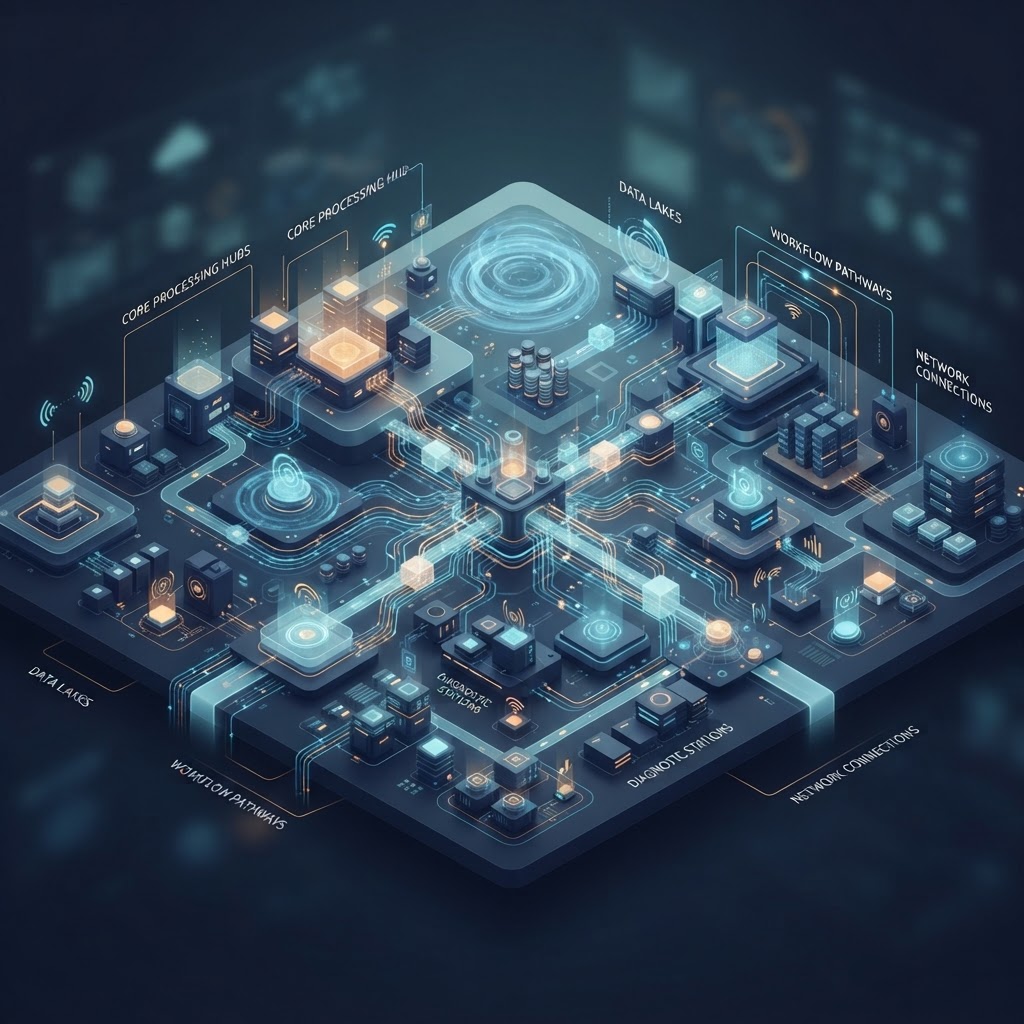
Platform Architecture vs Superficial Adoption
Deploying autonomous platforms requires substantial structural adaptation rather than simply turning on modular features. In an operational assessment published in SAP, Salesforce, and the Emergence Engine, industry analysts highlight that enterprise divergence stems from organizational redesign rather than platform tooling alone. Organizations that merely install software without establishing clear human override protocols, automated validation layers, and operational constitutions frequently fail to capture performance gains.
As enterprise back-office workflows automate via initiatives like Salesforce Launches Agentforce Operations, specialized agents now autonomously handle data extraction, credit modelling, and audit reconciliations. Operational success rests upon maintaining complete auditability and crisp escalation triggers whenever edge cases exceed pre-set boundaries.
Additionally, enterprise infrastructure must prepare for incoming interactions initiated by third-party personal bots. As outlined by Salesforce engineering leadership in Personal AI Agents: Let Them In Without Losing Control, organizations must implement robust verification gateways that validate intent before external consumer agents interface with proprietary business records.
Career Implications and Upskilling Pathways
For Salesforce administrators, functional consultants, and enterprise developers, the general availability of Agent Optimizer and modular AI Skills fundamentally shifts career value propositions. Routine configuration of standard data fields and repetitive Flow generation are increasingly handled by automated tooling. High-value practitioners will distinguish themselves through skills in conversational architecture, policy governance, and observability engineering.
Business analysts must focus on mapping precise business intent into reusable Skill definitions, while developers will specialize in creating high-performance custom integrations via MuleSoft and secure Apex extensions. Understanding automated telemetry, fallback mechanisms, and zero-retention data policies will become essential qualifications for platform architects across regulated sectors.
Practical Next Step
Audit existing Flow automations across your sandbox orgs to identify high-volume, rules-based tasks that can be refactored into modular AI Skills within Agentforce Studio, and evaluate Agent Optimizer telemetry to benchmark error recovery rates before staging agents in production.