The Brief: Recent benchmarks show that enterprise attempts to deploy autonomous workflows without mature internal platforms increase production instability. Platform teams must prioritise codified governance over ad-hoc pipeline automations.
Over the past fortnight, the operational realities of enterprise artificial intelligence have collided with day-to-day platform engineering. Fresh industry analyses, led by Octopus Deploy's Future of Platform Engineering Report and Perforce Software's 2026 Platform Engineering findings, highlight a growing divide between teams shipping reliable code and those drowning in pipeline debt. While leadership mandates fast AI adoption, baseline delivery infrastructure is struggling to support the surge in automated changes.
The findings arrive alongside data from Fleet Device Management's Road to AI in IT survey, reported by DEVOPSdigest, indicating that less than a third (29.6%) of organisations currently prioritise infrastructure as code (IaC). This missing baseline directly undermines automated guardrails, leaving teams vulnerable when autonomous tools initiate complex configuration modifications.
The Widening Reliability Chasm
Enterprise software teams are generating application code at unprecedented speed, yet production safety is lagging behind. Research from New Relic highlighted in recent DevOps industry coverage notes that while 94% of engineering leaders score AI-generated code higher during initial reviews, its deployment triggers an operational tax post-release. When automated workflows lack strict environmental guardrails, deployment failure rates and configuration drifts rise sharply.
According to Perforce Software, 44% of organisations with high internal developer platform (IDP) maturity run automated workflows autonomously, compared to only 26% of less mature teams. Standardised environments allow platform teams to embed policy-as-code and verifiable audit trails directly into developer self-service workflows. Teams lacking these foundations frequently face configuration sprawl and untracked infrastructure changes.
| Platform Maturity Level | Governance Approach | Infrastructure Delivery | AI Autonomy Readiness |
|---|---|---|---|
| Ad-Hoc / Early | Manual ticketing and ad-hoc scripts | Fragmented across console tweaks | Restricted to advisory suggestions |
| Standardised | Version-controlled CI/CD checks | Static Infrastructure as Code templates | Semi-autonomous with human sign-off |
| Advanced IDP | Policy-as-code and automated audits | Dynamic self-service developer APIs | Full policy-bounded workflow execution |
Why Infrastructure as Code Remains Non-Negotiable
Many technology leaders incorrectly assumed that platform engineering could shift focus exclusively toward developer experience. However, the data published by Octopus Deploy confirms that efficiency and foundational automation remain the primary business justification for funding platform initiatives. Without standardised, auditable baselines, internal platforms fail to protect systems from errant changes.
Version-controlled environments provide the essential boundaries that automated execution engines require. If an AI agent or automated CI pipeline cannot deploy against declarative configurations, teams lose their rollback capabilities. Auditing and state reconciliation must occur within the platform plane rather than across disparate cloud provider consoles.
Shifting Engineering Focus to Execution Layers
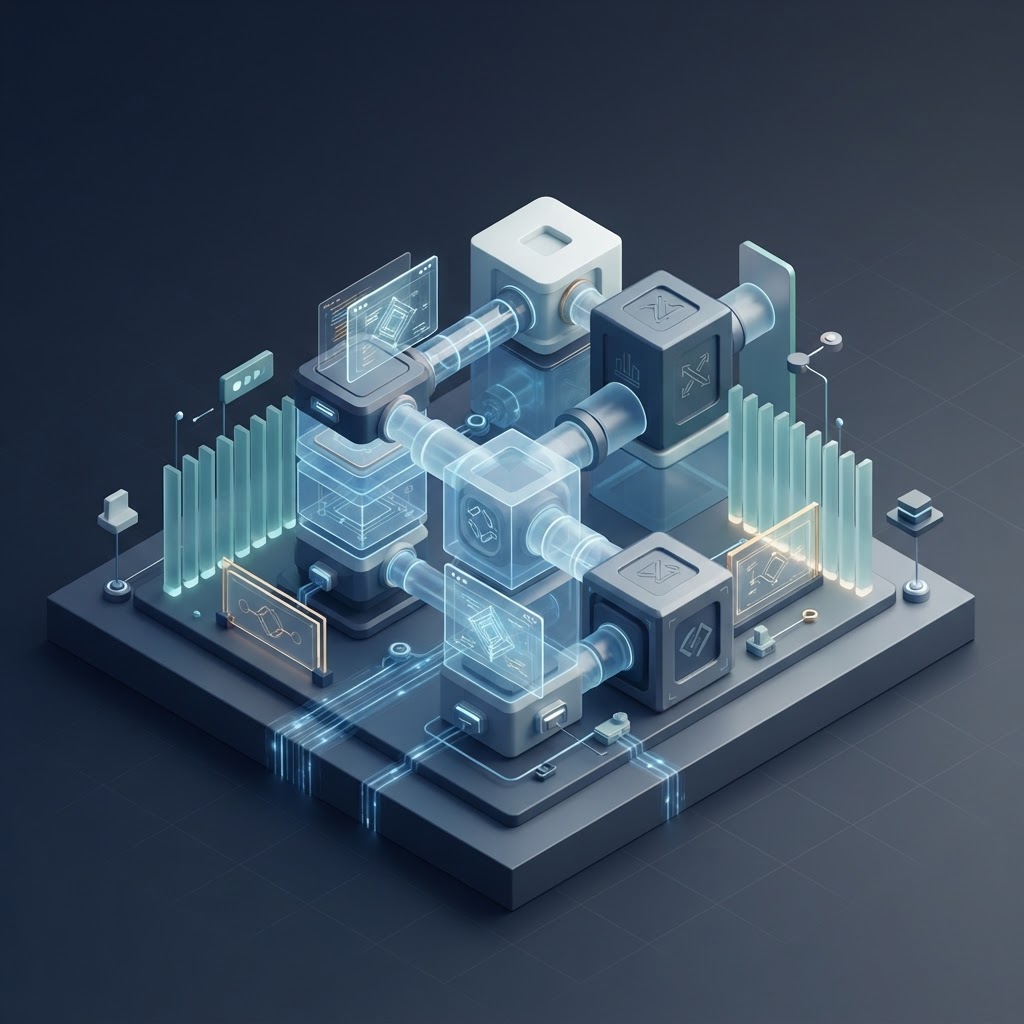
As implementation logic becomes commoditised by generative coding tools, platform engineering is reorganising around the execution layer. The challenge has moved from writing configuration scripts to designing guardrails that supervise changes automatically. Platform engineers now act as system architects who define secure execution envelopes for human and automated contributors alike.
- 01DeclareCodify all platform baselines in declarative version-controlled templates
- 02EnforceApply policy-as-code validation during continuous integration testing
- 03ExposeProvide safe self-service portals via standardized internal developer APIs
- 04ReconcileMonitor configuration drift with automated telemetry and rollback agents
Illustrative design pattern, not a vendor architecture.
This shift elevates the role of operational security within continuous delivery pipelines. In an era where automated agents generate pull requests and provision cloud resources, unvetted pipelines become immediate vectors for configuration failure and credential exposure. Modern platforms must continuously test architecture boundaries before any code reaches production.
Practical Implications for Technology Teams
This platform maturity divide has immediate ramifications for practitioners across multiple career pathways:
- DevOps and Platform Engineers: Focus must shift from manual pipeline authoring to orchestrating policy engines, audit frameworks, and programmatic APIs.
- Cloud and Infrastructure Specialists: Fluency in declarative IaC tools like OpenTofu or Terraform is mandatory, serving as the required boundary for modern automated operations.
- Software Engineers and Career Starters: Understanding execution flow, system observability, and telemetry matters far more than rote code syntax generation.
Organisations that skip platform hygiene in search of rapid AI gains accumulate unmanageable technical friction. As Perforce's product leadership noted, enterprise trust in automated systems is engineered through disciplined governance rather than better models.
Next Steps for Platform Practitioners
Platform teams should immediately audit their continuous deployment pipelines to identify unversioned cloud resources. Replace manual environment configurations with declarative code definitions before enabling further automated pipeline agents.