

The Brief
As enterprise AI adoption transitions from passive chat interfaces to continuous local agent execution, security boundaries must move into the operating system itself. On 8 October 2026, details emerged regarding Microsoft's native agent containment technology, designed to govern autonomous agent file access, memory execution, and network routing directly at the operating system layer.
The Shift to Operating-System-Level Agent Governance
Enterprise software architectures are rapidly moving away from isolated browser-based assistants toward multi-step, autonomous agents capable of interacting with corporate file systems, background databases, and private APIs. According to industry analysis reported by TechStartups, Microsoft has introduced dedicated containment capabilities that allow organisations to place autonomous AI agents into controlled, sandboxed runtime environments.
Rather than relying strictly on post-hoc prompt filters or external gateway policies, these system controls enforce operational limits while an agent executes tasks. System administrators and developers can explicitly define which local directories, enterprise network endpoints, and system resources an agent can access. This architectural change reflects an emerging consensus: autonomous digital workers require process isolation models comparable to those used for unverified operating system binaries.
Solving the Dual Challenges of Tool Access and Least Privilege
Traditional application security historically depended on predictable execution paths. In contrast, autonomous generative agents construct their own multi-step workflows dynamically, creating serious concerns around unintended lateral movement, insecure API interactions, and data exfiltration. As documented in industry analyses on Generative AI Trends, insecure API permissions and over-privileged tokens represent primary vulnerabilities in modern agentic implementations.
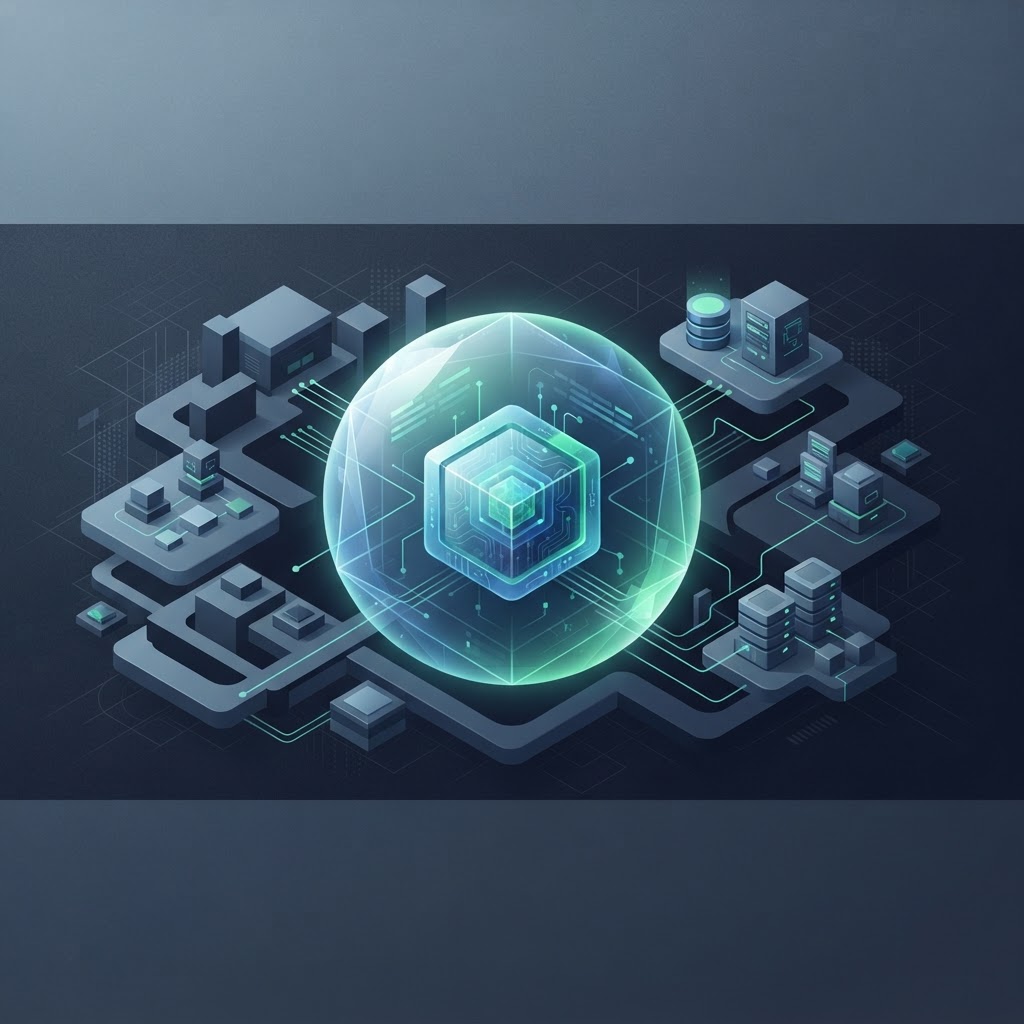
Operating system level containment tackles this vulnerability by establishing strict sandboxing protocols at runtime. By integrating directly with hardware-assisted virtualization and OS kernel permissions, organizations can apply the principle of least privilege to non-deterministic systems. When an agent attempts an action outside its allocated boundaries, such as accessing sensitive credentials or communicating with unverified endpoints, the kernel-level guardrail intercepts and blocks the call.
The Architectural Hybrid: Cloud Reasoning Meets Local Enforcement
This containment model coincides with a broader infrastructure pivot toward hybrid computing environments. While frontier models handle high-level reasoning, routine orchestration and high-frequency tool usage are increasingly delegated to smaller, local models running directly on endpoint hardware. Research from the State of AI Report highlights how rapidly autonomous workflows are progressing, making continuous round-trip cloud latency and recurring API compute costs significant enterprise bottlenecks.
Simultaneously, major model developers have reduced the financial threshold for smaller systems. For example, Anthropic released Claude Haiku 5.5 on 7 October 2026 at a substantial 75 percent cost reduction, as reported by TechStartups. By pairing low-cost, small models with local sandboxing, enterprises can run always-on background agents without exposing sensitive internal networks to unchecked execution risks.
- 01Task scopingIsolate the agent's objective and define specific file, socket, and memory permissions.
- 02Virtualised sandboxingInstantiate the autonomous process within an OS-level isolated container.
- 03Dynamic policy enforcementMonitor system calls and block unauthorised external API or directory interactions.
- 04Human gateway validationEscalate high-impact actions to verified human approvers before final execution.
Illustrative design pattern, not a vendor architecture.
Strategic Implications for Technical Teams and Career Changers
For software engineers, DevOps practitioners, and cybersecurity professionals, the integration of agent sandboxing into the operating system marks a permanent evolution in software architecture. System design is no longer just about optimizing prompts or configuring API wrappers. Instead, engineers must understand process isolation, hardware-assisted virtualization, and agentic identity access management.
Business analysts and project managers must also re-evaluate operational risk profiles. The presence of OS-level guardrails simplifies regulatory compliance under emerging risk management standards, but it demands clearer process mapping before agents are granted autonomy. Organisations will increasingly require staff who can articulate precisely which data sources and functional tools an agent legitimately needs to complete its assignment.
| Capability Dimension | Legacy AI Interface (2024) | OS Contained Agent (2026) |
|---|---|---|
| Runtime Location | Cloud-hosted browser sandbox | Hybrid edge-to-OS execution |
| Permission Model | Stateless token or broad user session | Dynamic, kernel-enforced least privilege |
| Threat Surface | Prompt injection, text leakage | Direct system calls, unauthorized API access |
| Governance Style | Post-generation prompt evaluation | Real-time operational containment |
Practical Next Step for Technology Practitioners
Technology professionals evaluating agentic systems should immediately audit the execution privileges of any currently deployed automated agents or local scripts. Ensure that all autonomous tool-calling routines operate through least-privilege service accounts rather than open developer tokens. Transition experimental agent workloads into isolated virtual environments or native operating system containers before connecting them to internal production databases.