

The Brief: Recent multi-survey data reveals that 28 percent of organisations now interact with CI/CD platforms using Model Context Protocol and autonomous agent skills, accelerating a massive shift back to self-managed delivery infrastructure.
Software delivery pipelines are encountering an unprecedented structural turning point. According to the JetBrains CI/CD Tools Adoption and Developer Ecosystem report, 83 percent of surveyed technology professionals run CI/CD pipelines, cementing delivery automation as the dominant practice across modern engineering. Crucially, 28 percent of organisations now access their continuous integration and continuous delivery tools through Model Context Protocol (MCP) or autonomous agent skills, fundamentally altering how code enters production.
This rapid automation influx arrives alongside significant infrastructure reorganisations. Rather than outsourcing execution entirely to managed public multi-tenant SaaS environments, 72.8 percent of respondents now host their primary delivery systems either on-premises or on self-managed cloud infrastructure. On-premises installations alone reached 30.5 percent in 2026, marking the highest adoption tier observed across five consecutive years of industry tracking.
The Shift to Machine-Consumable Delivery Planes
Traditional DevOps pipelines assumed human cadence. A software engineer drafted a commit, opened a pull request, waited for asynchronous automated test suites to run, and manually reviewed logs upon failure. Autonomous coding agents alter that balance completely by creating larger volumes of concurrent pull requests, as highlighted in industry platform discussions on agentic delivery risks.
Because autonomous workers execute tasks continuously, human gatekeeping quickly becomes an operational bottleneck. Platform engineers are restructuring pipelines to communicate bidirectionally with agents via standardised tool-calling protocols. Instead of reading plain text console outputs, agents require structured execution outputs, immediate machine-readable linting results, and deterministic remediation paths to triage broken builds autonomously.
- 01TriggerAgent or human initiates pipeline execution through MCP endpoints
- 02Policy VerificationAutomated gates validate tokens, tool identities, and change risk scores
- 03Isolated ExecutionContainerised jobs run on dedicated self-managed runner infrastructure
- 04Structured FeedbackDeterministic telemetry returns machine-readable error contexts to agents
Illustrative design pattern, not a vendor architecture.
Sovereignty and Containment Drive Self-Hosted Growth
The pronounced surge in self-managed CI/CD infrastructure reflects rising security concerns surrounding autonomous systems. The JetBrains research found that fully managed public CI/CD services account for only 24.4 percent of primary installations. When automated agents hold permissions to generate code, run deployment workflows, and trigger environment builds, giving third-party systems unmonitored runner access creates significant supply chain liabilities.
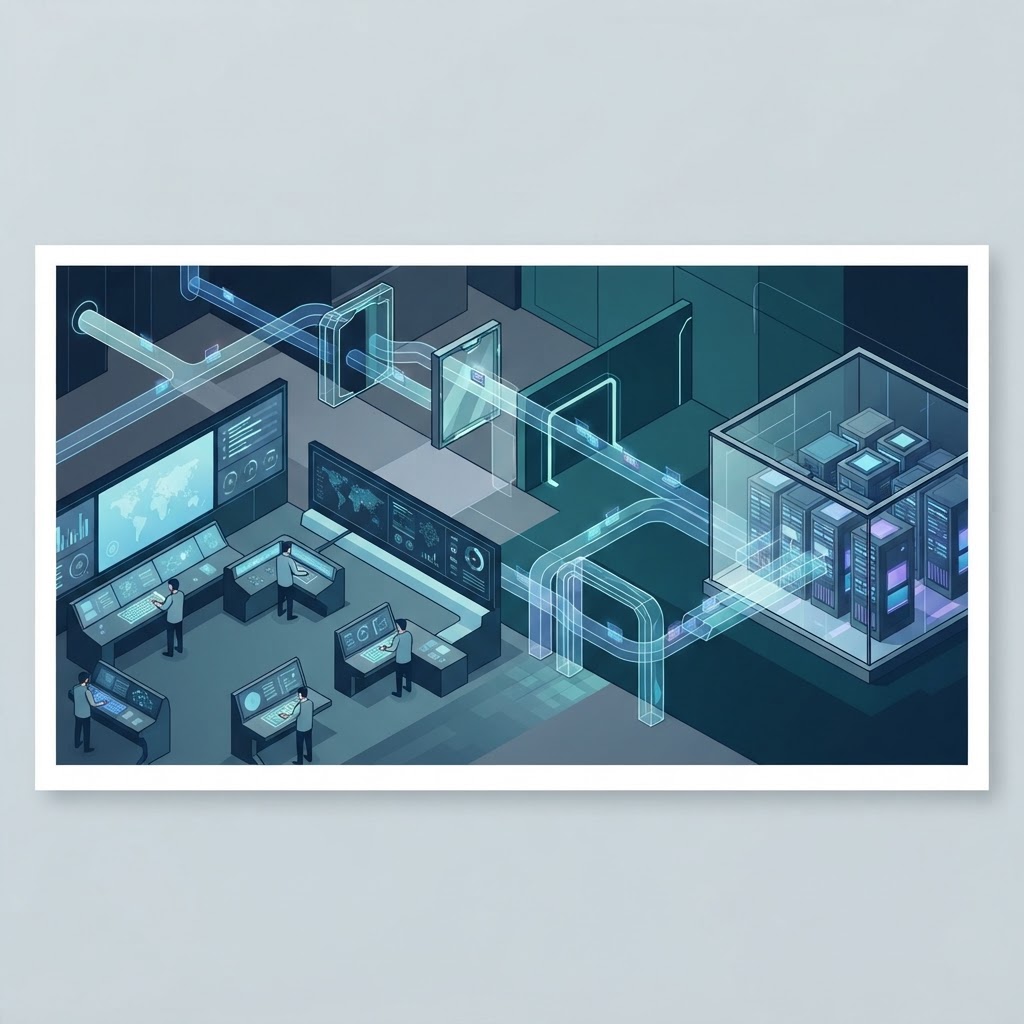
Recent supply-chain attack vectors targeted token leakages and pipeline scripts, reinforcing why platform teams insist on dedicated perimeter controls. By anchoring pipelines within private virtual networks and self-hosted instances, enterprises enforce strict network segmentation. Build runners can access private artifact registries and sensitive internal staging environments without exposing build tokens to public compute networks.
Platform Engineering Adapts to Agentic Consumers
This operational evolution directly impacts modern platform engineering. As defined in enterprise platform architecture guidelines, platform teams must design automated delivery systems that cater to non-human operators. The Internal Developer Platform (IDP) is actively adapting into an Agentic Development Platform (ADP), where capabilities are exposed as policy-governed APIs rather than just graphical web portals.
| Capability | Classic Developer Platform | Agentic Development Platform |
|---|---|---|
| Interface | Graphical web portal and standard CLI | Machine-consumable API and MCP tools |
| Identity | Personal user accounts and SSO | Scoped service identities with time limits |
| Verification | Asynchronous peer code review | Automated risk scoring and policy sandboxes |
| Recovery | Manual engineer troubleshooting | Autonomous agent log parsing and auto-fix |
Our analysis suggests that while continuous deployment automation eliminates manual release steps, it elevates the necessity for runtime policy engines. If code modifications multiply exponentially, organizations without strict programmatic guardrails will encounter surging incident rates. Reliability now hinges entirely on deterministic governance layers that isolate automated agent activity.
Strategic Takeaways for Tech Professionals
For platform and DevOps engineers, pipeline management has shifted from straightforward script maintenance to building secure execution contracts for autonomous agents. Teams can no longer rely on unauthenticated webhooks or broad service tokens when configuring delivery flows.
A practical first step is to audit your existing CI/CD endpoints. Identify whether internal build runners run on shared public infrastructure, enforce strict ephemeral token lifetimes, and ensure pipeline failures emit structured JSON schemas so automated assistants can consume errors safely without human intervention.