The Brief: On 8 October 2026, Google introduced a universal Gemini business agent capable of cross-application planning, autonomous subagent delegation, and interacting across workplace tools under a dedicated corporate digital identity.
The Emergence of Identified Enterprise Agents
On 8 October 2026, Google launched a significant capability update turning Gemini into an autonomous enterprise work agent, as reported by TechCrunch via Walter Stein AI News. The newly deployed system shifts the paradigm from human-directed conversational prompts to goal-directed, autonomous workplace workflows. Rather than acting strictly inside a sidebar interface, the system operates across disparate productivity applications to plan, execute, and verify complex operational assignments.
Crucially, Google has provisioned these agents with distinct workplace identities, including dedicated corporate email addresses and defined access permissions. This operational architecture enables agents to communicate directly with human colleagues, access enterprise systems securely, and preserve full accountability within organisational auditing structures. Providing agents with dedicated identities bridges the gap between software background services and digital enterprise co-workers.
Subagent Orchestration and Multi-Model Execution
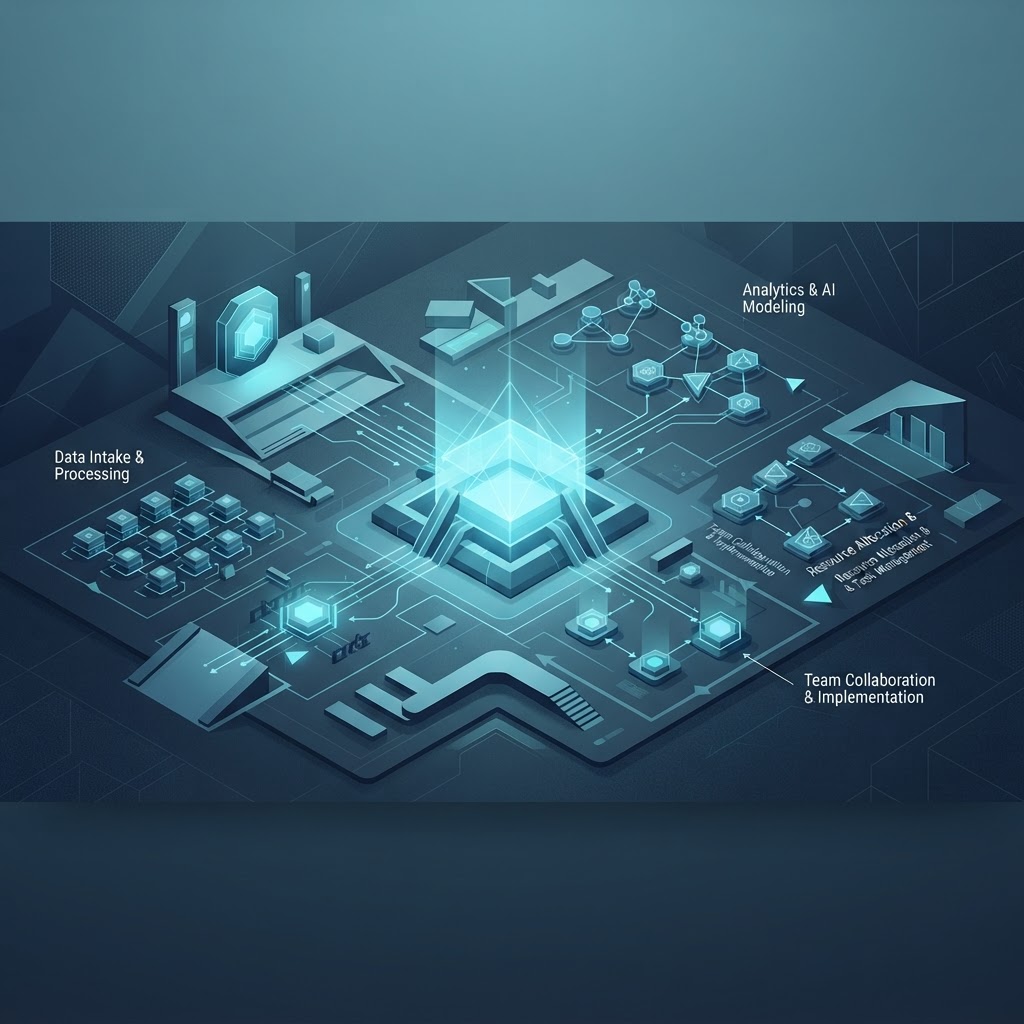
The architectural standout in this release is the native ability to decompose high-level directives into hierarchical workflows handled by specialised subagents. The central Gemini agent drafts an execution roadmap, provisions discrete sub-tasks, and invokes multiple underlying foundation models depending on the task requirements, such as code generation, deep research, or data reconciliation. This matches the broader transition towards multi-agent networks where tasks are distributed rather than concentrated within a single prompt thread.
- 01Directive ingestionThe primary agent parses the business goal and queries relevant corporate systems
- 02Task decompositionThe agent generates an execution plan and provisions specialised subagents
- 03Multi-system executionAutonomous workers interface with tools via APIs and MCP integrations
- 04Supervised escalationOutcomes are compiled and flagged for human approval before final commitment
Illustrative design pattern, not a vendor architecture.
By leveraging structured integration protocols such as the Model Context Protocol documented by EITT, autonomous systems are moving away from bespoke API connections. Standardised tool invocation gives subagents verified interfaces to enterprise databases, internal tracking tickets, and collaboration software without requiring custom wrappers for every service.
Federated Governance and Identity-First Guardrails
As enterprise agents gain persistent identities, control boundaries must evolve from static prompt safety to robust identity and access management (IAM). This release follows wider regulatory and banking developments highlighted in AI Governance Weekly, where regulated institutions are establishing layered control benchmarks to oversee permitted tool access, output safety, and post-deployment observability.
When agents hold corporate email addresses and interact through shared channels, legacy monitoring fails. Operations teams must ensure that digital identities possess least-privilege rights, automated session timeouts, and deterministic circuit breakers. Without rigorous guardrails, autonomous subagents risk triggering unchecked execution cascades across shared operational data.
| Governance Layer | Legacy Copilot Configuration | Autonomous Agent Ecosystem |
|---|---|---|
| Identity Model | User impersonation during active session | Persistent, dedicated corporate identity |
| Task Execution | Single-turn prompt and immediate response | Multi-step planning with subagent delegation |
| Integration Standard | Proprietary tool calls and static plugins | Model Context Protocol and authenticated APIs |
| Supervisory Oversight | Human initiates every intermediate turn | Event logging, threshold checks, and exception escalation |
Career Implications Across Professional Roles
The pivot towards autonomous multi-agent systems directly alters required skills across several technological and analytical disciplines:
- Business Analysis and Project Management: Analysts must transition from documenting simple user stories to mapping end-to-end agentic decision logic, identifying permissible decision boundaries, and defining human-in-the-loop escalation criteria.
- Cloud and DevOps Engineering: Cloud engineers are now tasked with orchestrating agent runtime sandboxes, configuring secure OAuth scopes for autonomous identities, and instrumenting tracing platforms for real-time observability.
- Cybersecurity: Security practitioners must address indirect prompt injection, tool abuse, and non-human identity governance to prevent rogue or hijacked subagents from breaching corporate networks.
- Agentic AI and Software Engineering: Developers will spend less time authoring custom API boilerplate and more time building resilient multi-agent orchestration pipelines that adhere to open communication standards.
The Practical Takeaway
Organisations deploying autonomous agents should audit their existing identity directories today, ensuring that AI agents are provisioned under constrained service accounts with strict role-based access rather than shared administrative credentials.