

The Brief: An industry report on 16 October 2026 highlighted that enterprise governance controls cannot keep pace with autonomous AI agents. For data engineers and analytics professionals, this operational gap marks a permanent transition from passive data cataloguing to real-time, upstream data readiness.
The Breakdown Between Static Pipelines and Autonomous Agents
On 16 October 2026, technology analysis published by AI Business revealed a growing dilemma across modern IT estates: enterprise data governance controls are failing to keep pace with the velocity and multi-step autonomy of agentic AI systems. While enterprise engineering teams have successfully connected large language models to internal data sources, traditional verification layers and security controls remain largely decoupled from real-time agent workflows.
This gap presents major operational liabilities. Autonomous agents do not consume data in predictable, batch-driven intervals, nor do they process schemas in the structured manner of traditional business intelligence dashboards. When an agent queries enterprise context to complete multi-step tasks, static lineage reports and passive documentation cannot prevent hallucinated conclusions or unauthorised data queries.
The Reality of AI Data Readiness Gaps
Industry research underscores the urgency of addressing this structural mismatch. Analysis documented by Alation highlights that 63 percent of data leaders doubt their practices are sufficient for enterprise AI, while industry forecasts estimate up to 60 percent of AI projects risk abandonment without certified, AI-ready data foundation layers. The primary source of failure is not model capability, but data ambiguity.
Uncurated tables, conflicting business metrics, and missing operational context corrupt autonomous agent decision loops. When human analysts consume imperfect dashboards, they apply common-sense discretion to anomalous metrics. Autonomous agents possess no such human intuition; they execute downstream tasks based on literal data feeds, converting unvalidated data points into erroneous financial records or customer communications at automated speeds.
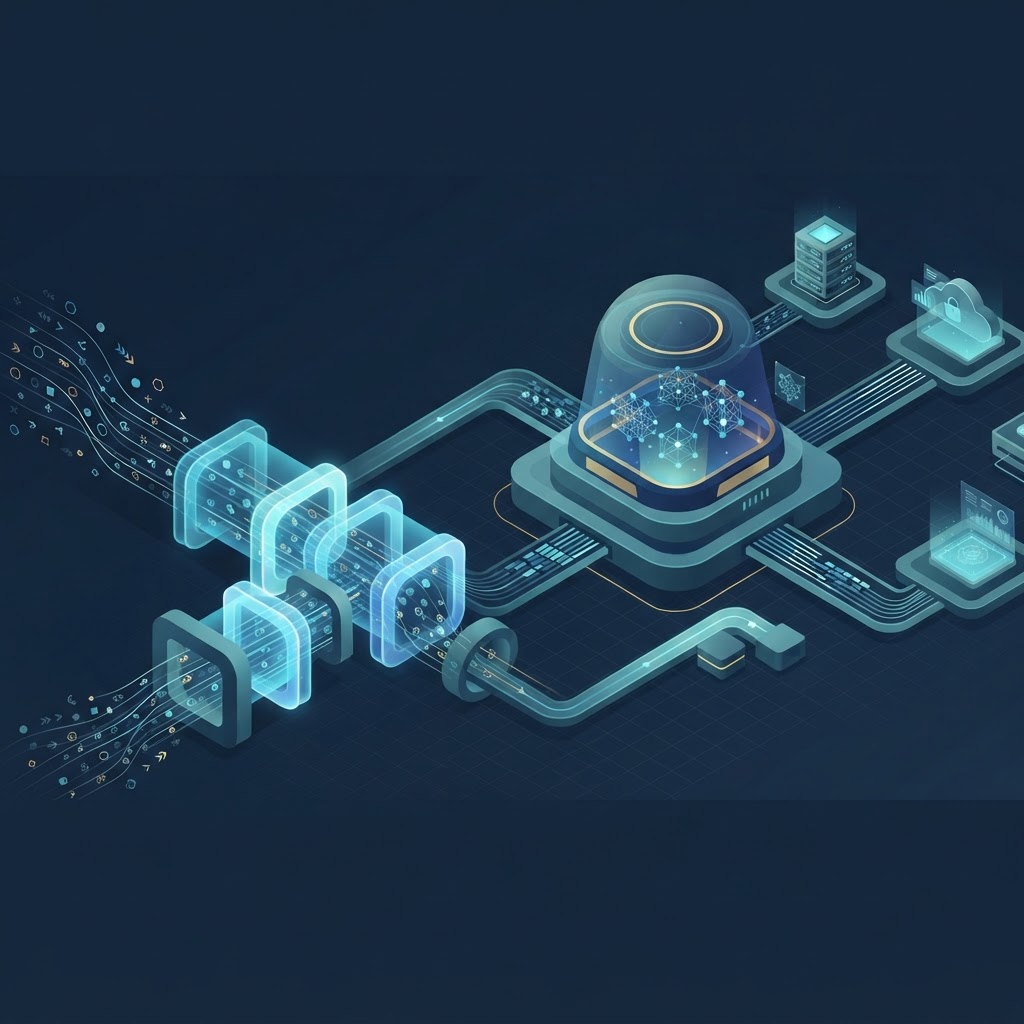
Upstream Shift: Replacing Post-Hoc Audits With Data Contracts
To prevent autonomous systems from acting on invalid context, engineering teams are shifting validation mechanisms upstream. Industry discussions between platforms such as IBM and Confluent, captured in IBM Think 2026 Insights, point to a clear consensus: data governance cannot function as an afterthought or periodic audit. It must operate at the source where events are streamed and ingested.
This shift transforms data engineering responsibilities from pipeline maintenance to data contract implementation. By enforcing strict schemas, automated anomaly rejection, and verifiable semantic definitions at the data streaming tier, organisations deliver trustworthy context straight to retrieval layers. Real-time observability replaces quarterly audits, ensuring that only certified payloads reach autonomous execution engines.
- 01Contract DefinitionEstablish machine-readable schema contracts and semantic definitions directly at the source
- 02Upstream ValidationIntercept streaming anomalies and unverified records before they land in data storage
- 03Context EnrichmentAttach active metadata and provenance tags to raw events automatically
- 04Agent IngestionExpose validated context to autonomous decision models via standardised protocols
Illustrative design pattern, not a vendor architecture.
Practical Implications Across Career Paths
The gap in AI-ready controls alters skill expectations across data disciplines:
- Data Analysts and Business Intelligence Practitioners: The role moves beyond dashboard design toward defining precise semantic layers. Analysts must encode domain definitions, metric hierarchies, and lineage metadata so autonomous query engines interpret figures without ambiguity.
- Data Engineers: Teams must pivot from scheduled batch pipelines to real-time event validation. Expertise in data streaming, data contracts, and dynamic schema enforcement is rapidly overtaking legacy extract, transform, and load (ETL) tooling.
- DevOps and Platform Engineers: Teams must deploy runtime guardrails and automated context APIs to verify agent outputs before execution, treating agent-facing data interfaces with the same security rigour applied to production APIs.
| Operational Dimension | Legacy Data Architecture | AI-Ready Agent Architecture |
|---|---|---|
| Governance Posture | Passive quarterly audits and static catalogs | Active real-time contract enforcement |
| Data Delivery | Scheduled batch extract and transform jobs | Real-time streaming with upstream checks |
| Context Layer | Human-readable wikis and dashboard notes | Machine-readable semantic metadata APIs |
| Failure Response | Manual dashboard reconciliation | Automated rejection of unverified inputs |
Practical Takeaway
Audit your primary data assets for agent readiness this week. Identify your team's most critical operational dataset and define a machine-readable data contract for its three most contested fields. Establishing explicit field formats, acceptable value ranges, and clear ownership eliminates the ambiguity that causes autonomous agent failures.