

The Brief: As autonomous agents increasingly handle end-to-end software delivery, enterprises are shifting attention from raw generation to independent verification layers that validate agent output before deployment.
Software development pipelines are experiencing a structural transition. According to industry analyses compiled by Autonomous.ai, production-ready multi-agent systems are rapidly specialising across discrete phases: requirements scoping, code generation, testing, code review, and documentation. Crucially, engineering audits indicate that standalone code generation agents frequently produce compound errors, making dedicated verification agents the primary driver of quality.
This shift reflects a growing operational reality: raw agent productivity without automated validation merely accelerates technical debt. Independent guardrails and validation agents are becoming standard architecture to ensure autonomous routines remain predictable, secure, and compliant.
The Architecture of Agentic Development Pipelines
Modern enterprise agent architectures depart sharply from single-prompt assistants. Rather than relying on an individual model to draft, critique, and deploy software, organisations deploy multi-agent networks operating with strict role boundaries.
In these workflows, generation agents draft code against predefined tickets, while distinct review agents scrutinise syntax, security vulnerabilities, and system dependencies. In parallel, specialised verification tooling, such as deterministic guardrails and visual validation systems highlighted in developer tool updates documented by Agentic AI News, checks user interfaces and functional logic to catch defects that generative models miss.
- 01Ticket IngestionRequirements agent validates specifications and defines constraints.
- 02Code SynthesisPrimary generation agent writes software changes and unit tests.
- 03Verification CheckIndependent validation agent runs static analysis and UI regression.
- 04Human ApprovalTech lead reviews audit logs and authorises production merge.
Illustrative design pattern, not a vendor architecture.
This separation of responsibilities prevents confirmation bias within an isolated agent. When verification operates as an external gate, teams preserve execution velocity while protecting application integrity.
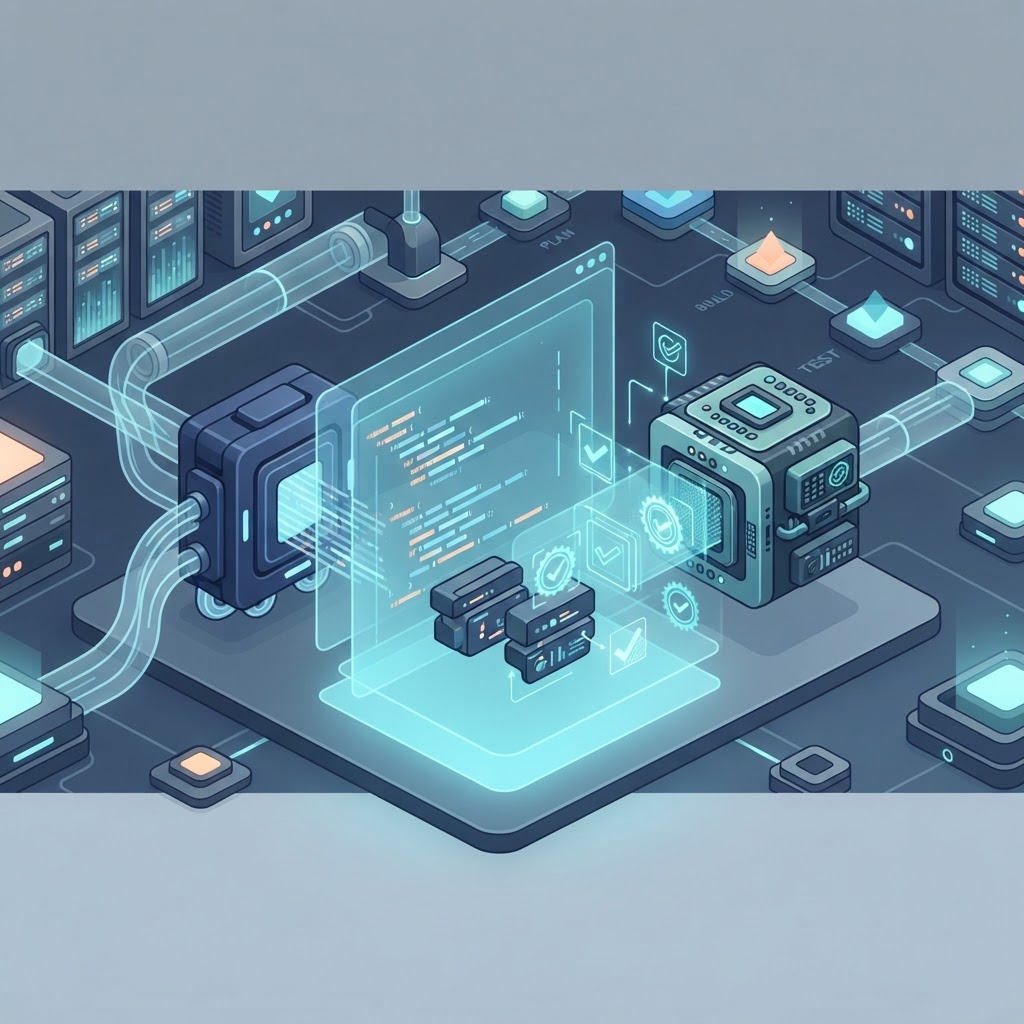
Verification Over Generation in Enterprise Quality
Deployment maturity studies show that removing validation layers to curb latency or token costs causes software quality to fall below single-agent baselines. Validation agents enforce deterministic standards that probabilistic models regularly overlook.
| Pipeline Stage | Primary Agent Function | Operational Risk Controlled |
|---|---|---|
| Planning | Decomposes tickets into functional specs | Scope creep and ambiguous requirements |
| Implementation | Generates modular software routines | Syntactic hallucinations and regression bugs |
| Quality Assurance | Runs end-to-end regression and visual checks | Undetected interface flaws and UI degradation |
| Security & Governance | Audits API calls and data boundaries | Permission escalation and identity breaches |
By treating verification as a dedicated layer, engineering leads ensure that every pull request satisfies existing architectural patterns before human engineers commit valuable review time.
Emerging Governance and Identity Controls
Autonomous execution introduces complex compliance hurdles. When agents autonomously call external APIs, generate database queries, and manipulate codebases, tracking identity and authorization becomes paramount.
The regulatory and standards landscape is responding directly to these operational concerns. The National Institute of Standards and Technology launched its AI Agent Standards Initiative to address agent identity, authentication, and interoperability protocols across enterprise ecosystems. In parallel, research outlined by MetricStream emphasizes that emerging compliance frameworks will mandate comprehensive audit logs for agent-driven decision pipelines.
Organisations must maintain complete auditability for every action taken by an autonomous agent. If an agent modifies cloud infrastructure or updates production services, security teams require an immutable trail tracing the decision logic, validation checks, and human sign-offs involved.
Skills and Career Impact Across Disciplines
This evolution changes how technical roles operate across organisations. Software engineers and DevOps specialists must learn to design orchestration frameworks, configure deterministic guardrails, and audit multi-agent interactions rather than solely writing routine code.
For quality assurance teams, career growth centres on designing synthetic testing harnesses and evaluation suites that grade autonomous agents. Business analysts and project managers increasingly guide the scope boundaries and handoff protocols that ensure agents adhere to corporate requirements without manual oversight at every step.
Practical Takeaway
Organisations deploying autonomous agents should immediately establish independent verification gates in their CI/CD pipelines, requiring separate review agents or deterministic test suites to sign off on code changes before human review.