

The Brief: On 5 November 2026, Anthropic moved inference hooks to general availability within Claude Enterprise, enabling organisations to validate model prompts and evaluate impending tool calls against internal security policies before code execution.
Intercepting Agent Decisions at Runtime
Enterprise security architecture has historically struggled to monitor autonomous software agents during live operational steps. While static evaluations and safety pre-training reduce foundational model hazards, they fail to prevent contextual runtime risks, such as accidental data egress or unauthorised API commands.
On 5 November 2026, Anthropic addressed this operational gap by moving Claude Enterprise inference hooks into general availability alongside a new security centre beta. The infrastructure enables corporate security tools to actively inspect supported prompts and impending tool invocations before the agent executes an external action.
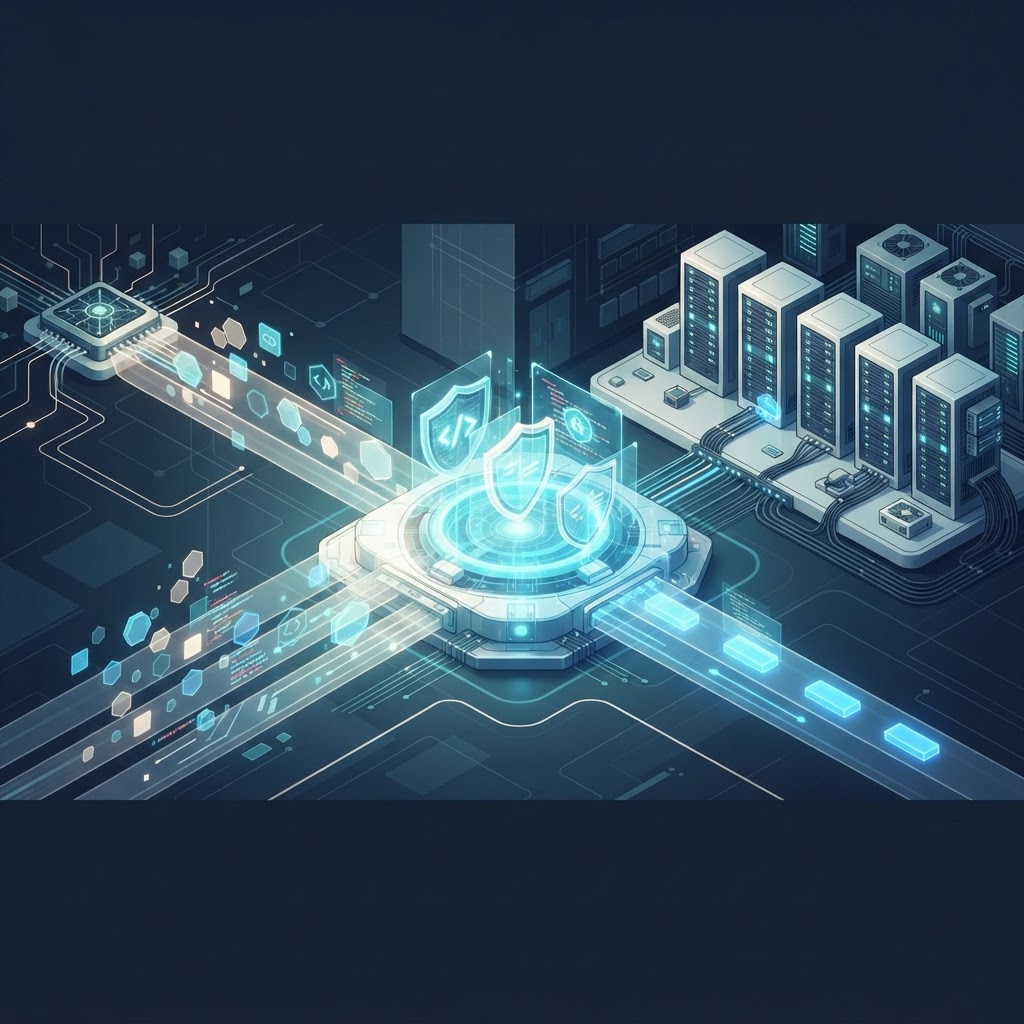
This shift transforms AI safety from post-generation log auditing into real-time operational policy enforcement. By interposing intermediate governance directly at the execution boundary, enterprises gain the ability to intercept malformed parameters or policy-violating tasks without severing the autonomous agentic loop.
Shifting Governance to the Execution Boundary
Until recently, enterprise safeguards relied heavily on either input filtering at the initial prompt interface or prompt-response evaluations following model output. Autonomous agents complicate this arrangement because they formulate multi-step execution plans where subsequent actions depend dynamically on intermediary environmental feedback.
Recent market data highlights why execution-time control has become urgent. According to Menlo Ventures research published on 3 November 2026, enterprise AI spending surged 5.4-fold to $176.8 billion, with autonomous agents accounting for 80% of all observed API token consumption. As agents execute increasingly dense task volumes across internal databases and external services, catching unverified calls before network execution becomes the decisive boundary.
In our analysis, the general availability of inference hooks reflects a critical architectural consensus: pre-training reductions cannot guarantee deployment safety on their own. Runtime validation mechanisms provide an essential second layer of defence, insulating internal environments from unintended lateral movements or accidental credential leaks.
Operational Impacts Across Enterprise Roles
The introduction of runtime interception fundamentally alters technical workflows across several enterprise disciplines:
- 01TriggerThe agent identifies an operational action and prepares an external tool call
- 02InterceptInference hooks capture tool arguments and payload before network execution
- 03ValidateCorporate security engines and compliance policies evaluate invocation parameters
- 04ResolveThe action is approved, quarantined for human review, or terminated safely
Illustrative design pattern, not a vendor architecture.
For cybersecurity teams, inference hooks establish a standardised inspection plane, eliminating the need to construct bespoke proxies for every external API integration. Security engineers can now implement programmatic rule checks that intercept calls requesting unusual payload sizes, restricted file systems, or unauthorized destination endpoints.
For devops and software engineering professionals, embedding validation within the inference cycle requires treating agentic tool calls as unvetted network requests. Engineers must design robust fallbacks so autonomous tasks can gracefully handle blocked or modified calls without entering unhandled exception loops.
For data analytics and governance specialists, intercepting tool arguments ensures queries against internal data warehouses conform to data protection baselines before data leaves local storage. This structured gatekeeping prevents inadvertent exfiltration through model execution channels.
Mitigating Unconscious Human Over-Reliance
Validating tool calls before execution also helps counterbalance known human behavioral weaknesses in agent oversight. New empirical alignment research published by Anthropic on 6 November 2026 examined 50 professional analysts completing statistical analysis alongside AI agents. When presented with divergent, defensible analytical paths, analysts systematically adopted the agent's preferred option, rarely citing the agent as the reason for their decision.
This cognitive bias illustrates why relying solely on human-in-the-loop approvals is inadequate for complex multi-step tasks. Human supervisors frequently succumb to automation bias when reviewing high-cadence actions. Automated inference hooks enforce rigid guardrails that do not tire, mitigating the risks posed by human review fatigue.
Practical Next Steps for Technology Teams
Organisations currently piloting agentic workflows should immediately map their critical tool interfaces to identify high-consequence execution paths. Teams should audit database write commands, external communication endpoints, and cloud provisioning APIs to determine which actions require programmatic pre-execution inspection.
Technologists preparing for agent orchestration should practise configuring pre-call security hooks within test harnesses. Rather than treating foundation model completions as trusted runtime commands, treat every agent-generated function call as an untrusted input that must clear enterprise policy verification.